





A certificate of lawful use or development for solar panels (Ref 3349450)
The appeal related to the installation of solar panels on the roof of a building within a conservation area. The applicants considered that the optimum position for solar gain was to site the panels on the front elevation of the dwelling, facing the highway. The council rejected this proposal, noting that more discreet and practicable alternative had not been demonstrated. This is controlled by Part 14 Class A of the General Permitted Development (England) Order 2015.
The council originally raised concerns about A.2(a), which is a condition attached to the permission granted by the GPDO that the panels should be ‘so far as practicable, sited so as to minimise [their] effect on the external appearance of the building’. The appellant had provided evidence from the installation company that the estimated annual output from panels on the rear roof would be around 30 per cent less than on the front (2,876 kwh for the front and 1,994 kwh for the rear). The inspector did not consider this to be a big difference. The inspector went on to define the word ‘practicable’ and rejected the viability assessment submitted by the appellant in considering the meaning of that word. In any case, this did not overcome the requirement within the second part of the condition to ‘minimise its effect on the appearance of the building’. Dismissed.
Please note that this article is not intended to provide legal advice.
This article originally appeared in the Institute of Historic Building Conservation’s (IHBC’s) Context 184, published in June 2025. It was written by Alexandra Fairclough a member of the IHBC law panel and a barrister (non-practising). She teaches heritage law at Manchester School of Architecture and is principal built heritage and design officer at Bolton Council.
--Institute of Historic Building Conservation
Related articles on Designing Buildings Conservation.
IHBC NewsBlog
National Trust for Scotland calls for VAT cuts
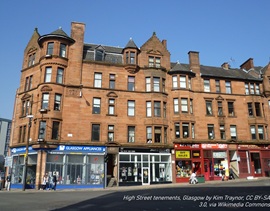
Heritage neglect is encouraged by current policies
IHBC's 'Context' Issue 186 features Industrial Heritage
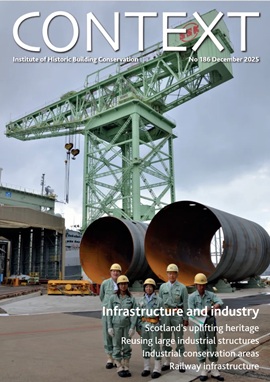
IHBC's members' journal reports on the challenges of conserving infrastructure.
Book now for IHBC Annual School 2026
IHBC Annual School is taking place 18-20 June 2026 in Newcastle.
RICHeS Research Infrastructure offers ‘Full Access Fund Call’

RICHeS offers a ‘Help’ webinar on 11 March
Latest IHBC Issue of Context features Roofing
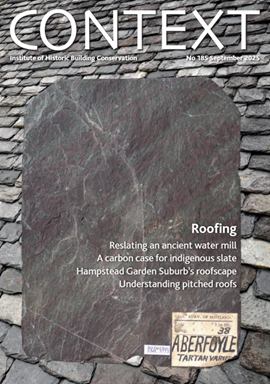
Articles range from slate to pitched roofs, and carbon impact to solar generation to roofscapes.
Three reasons not to demolish Edinburgh’s Argyle House

Should 'Edinburgh's ugliest building' be saved?
IHBC’s 2025 Parliamentary Briefing...from Crafts in Crisis to Rubbish Retrofit
IHBC launches research-led ‘5 Commitments to Help Heritage Skills in Conservation’
How RDSAP 10.2 impacts EPC assessments in traditional buildings

Energy performance certificates (EPCs) tell us how energy efficient our buildings are, but the way these certificates are generated has changed.
700-year-old church tower suspended 45ft

The London church is part of a 'never seen before feat of engineering'.
The historic Old War Office (OWO) has undergone a remarkable transformation

The Grade II* listed neo-Baroque landmark in central London is an example of adaptive reuse in architecture, where heritage meets modern sophistication